
School Board — May 19, 2026
Salem School Board reviews MTSS-B data on May 19 showing reduced tardies, absences, and suspensions with no public input taken
The meeting consisted entirely of informational updates on existing MTSS-B initiatives with uniformly positive trend data and no public input or board disagreements.
 Video still
Questions about this meeting? Just ask.
Ask MeetingWatch answers from this meeting’s report, transcript, and records — with linked sources.
On May 19 the Salem School Board received a series of updates on its MTSS-B framework covering attendance enforcement, cell phone procedures, SmartPass hall passes, and tiered behavior supports.
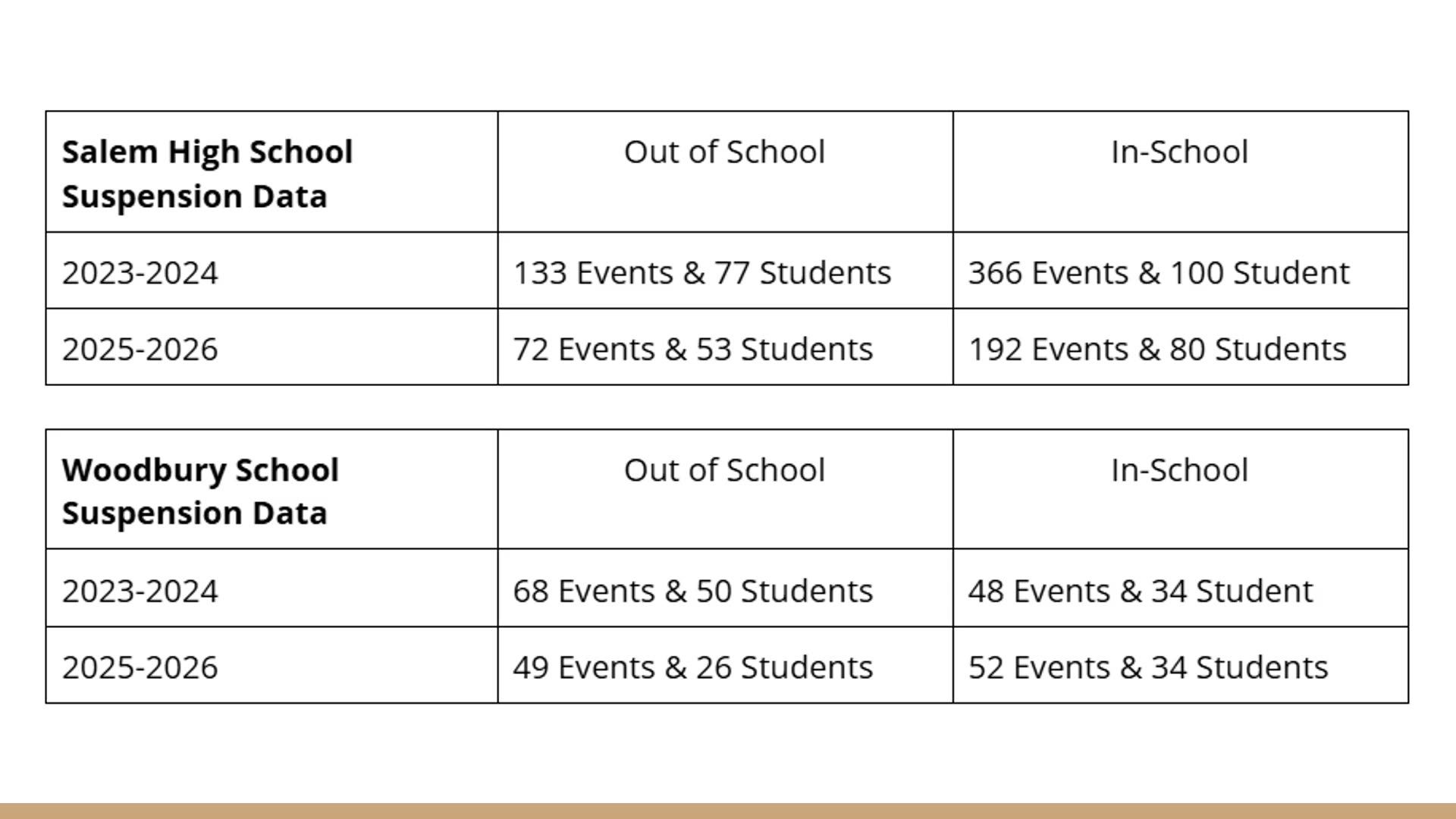
Staff reported measurable drops in tardies (24-40%), absences (8%), out-of-school suspensions (over 50% at high school), and fights. High school data also showed a 92% reduction in phone-related incidents. Presenters stated that professional development on de-escalation and adult self-regulation operates alongside unchanged consequences, with specific notes that juniors and seniors must face accountability.
Board discussion included questions on enforcement consistency and data integration across SmartPass, Infinite Campus, and Raptor systems. No public input was taken. Additional attendance trend comparisons for 2024-25 and 2025-26 were requested for later delivery.
Topics discussed
Board received Tier 1 updates on revised attendance/tardy enforcement and cell phone ban procedures, including three-year data showing reductions in overall tardies (24-40%) and absences (8%) alongside increases in documented unexcused incidents due to stricter rules.
Data presented showed continued declines from prior years; board members noted anecdotal improvements in hallways/cafeteria and discussed need for ongoing monitoring of educational effects.
Additional tardy/absence trend data from 2024-25 to 2025-26 to be provided separately.
 Video still
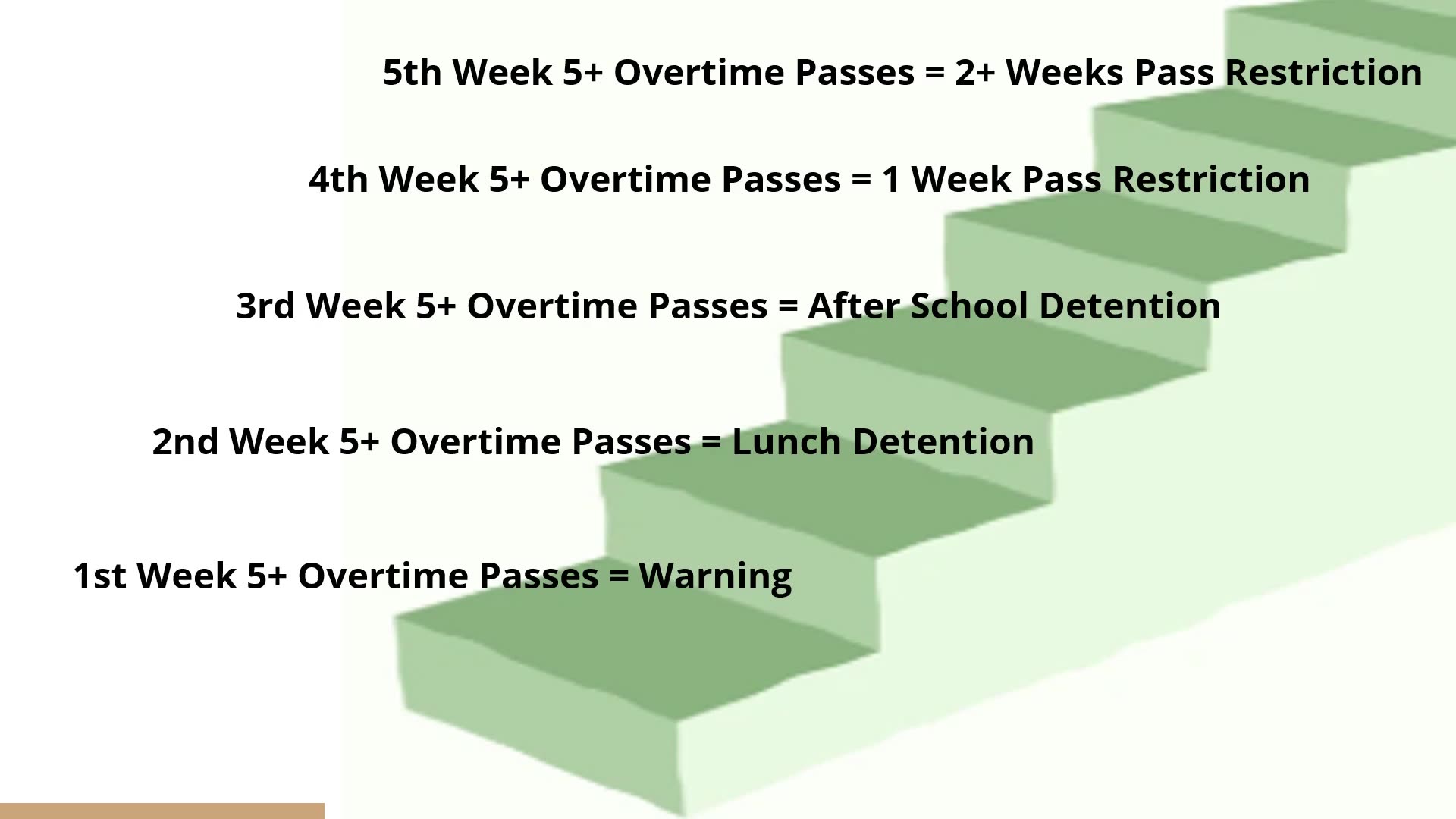
High school deans presented implementation of SmartPass for tracking student movement, overtime passes, and restrictions, with weekly reviews and progressive interventions for chronic overuse.
Staff described current weekly manual processes and ongoing IT committee work on system interoperability; no immediate changes adopted.
Continued weekly data committee meetings; potential future exploration of third-party integration support.
Review of reduced out-of-school and in-school suspensions (50%+ drops at high school) attributed to behavior supports, followed by overview of CPI-based PD on neuroscience, stress responses, and adult-student interactions. Board and staff discussed professional development on adult self-regulation, de-escalation, and reframing relationships while emphasizing that consequences remain in place; age-specific differences in accountability were highlighted.
Board acknowledged value of de-escalation training while stressing consequences remain part of the overall system; staff clarified PD focuses on prevention and reflection rather than replacing accountability. Clarification given that consequences are unchanged and part of the framework; reductions in fights and other incidents presented as evidence that behaviors themselves are decreasing.
Ongoing onboarding for new deans to maintain systems and continuity.
Introduction of a new district-developed coaching tool for consistent tier-1 classroom behavior management strategies at the elementary level.
Tool to be launched next school year; data expected in subsequent years.
Implementation and data collection beginning 2026-27 school year.
Update on tier-2 response plans used to create consistent staff responses to targeted behaviors, primarily at elementary level with limited middle/high school use.
Response plans confirmed as a successful tier-2 tool; numbers reflect usage, not total tier-2 population.
Development of comparative data on students moving across tiers.
Review of tier-3 practices (FBAs, BCBAs, BIPs) and three-year data showing 139 students on behavior caseloads (4.1 % of population) and sharp drops in suspensions for students with disabilities.
Data presented as evidence that tier-1 and tier-2 efforts are effective; board accepted the positive trend and alignment with state averages.
Board thanked Mr. Little for his final presentation, heard high-school end-of-year announcements, and adjourned.
Motion to adjourn passed 5-0.
Controversy & dissent
Public comment
Decisions logged
Action items
Member positions
Positions marked ~ are inferred from context and may not reflect the member's explicitly stated position. UNCLEAR means the vote was split but the record did not name how this member voted — it is not a “yes.”
From the meeting
 Video still
Creating this report cost real money.
MeetingWatch attended, transcribed, and analyzed this meeting on its own dime. If this work is valuable to you, chip in to keep covering Salem.
Follow Salem
One email when a new report is published from the School Board — or one weekly digest.
grok-4.3, grok-4.20-0309-reasoning · analyzed 2026-06-22.
Members feature
Ask questions. Get answers with receipts.
Ask about anything covered on this page and get a plain-English answer that links to the report, the official records, and the exact moment in the meeting video.
Create a free accountFree with a MeetingWatch account — no card, no spam.
Already a member? Sign in
Ask questions about any meeting
Open a community, board, issue, or meeting and I can answer from its records — with links to the report, official documents, and the exact moment in the video.
Then reopen this button to start asking.
AI-generated from meeting records — verify against the linked sources. Conversations are stored (privacy).