
Your area Not set — showing everywhere
Meeting report · Zoning Board of Adjustment
Creating this report cost real money. Help fund coverage →

Zoning Board of Adjustment — July 1, 2026

The meeting featured high public interest and a series of spirited legal arguments from residents regarding the interpretation of state statutes and zoning ordinances.
Date Wednesday, July 1, 2026 Duration 2.0h Speakers 18 Public comments 7 Decisions 8 Lively
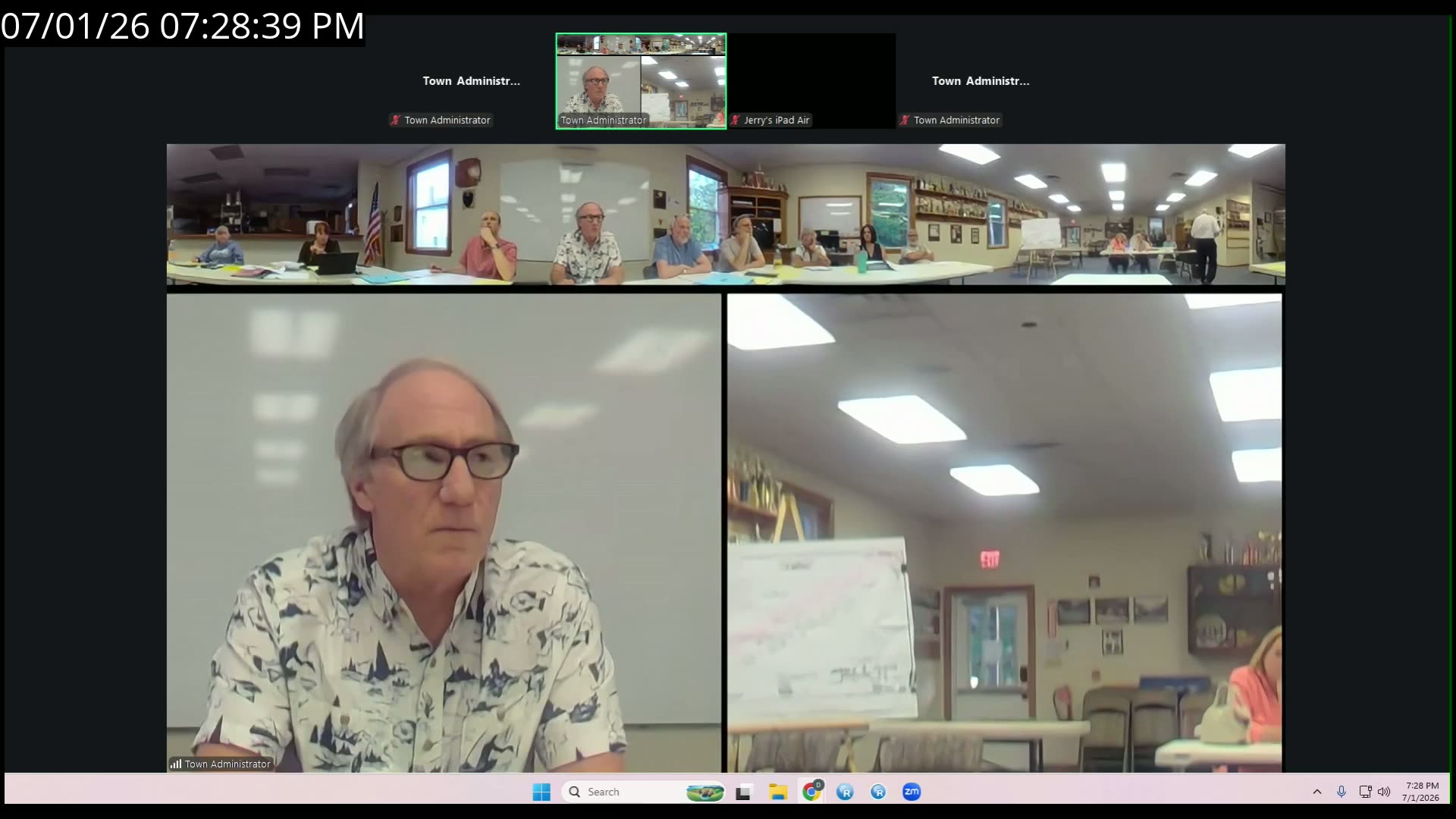
Flip-chart map or site plan displayed on easel Video still
Flip-chart map or site plan displayed on easel Frame from meeting video ▶ 28:23

Questions about this meeting? ⁠Just ask.

Ask MeetingWatch answers from this meeting’s report, transcript, and records — with linked sources.

Summary AI-generated to surface controversy & community impact without bias — always verify against the actual meeting before relying on it.

At the July 1st Zoning Board of Adjustment meeting, the Board addressed a high-interest appeal regarding whether a property could bypass current zoning requirements for a duplex using 'vested rights' from a 1986 subdivision plan.

The debate centered on two legal questions: first, whether the 1986 lot line adjustment was a 'subdivision' that was 'substantially complete' under state law; and second, whether that completeness granted the right to build a duplex regardless of current lot size rules.

Residents expressed significant concern during the meeting, arguing that 'substantial completion' should require physical improvements like roads rather than just the recording of deeds. However, the Board ultimately ruled that the recording of the deeds was sufficient to vest the 1986 lot lines.

Despite this finding, the Board denied the duplex appeal. They concluded that while the lot lines are protected, the property itself does not meet the current zoning requirements for the amount of contiguous dry land needed to support a duplex. The Building Inspector's original denial was upheld. The appellant has 30 days to request a formal rehearing.

Jul 1, 2026 2.0h long 18 speakers 7 public comments 8 decisions Lively
Notable statements Drag to browse

“The lot as presented to us, does not appear to have the requisite area of contiguous dry land that is required for a duplex.”

— Unidentified speaker · Concluding the discussion on whether the vested rights protected the ability to build a duplex despite the lot size. ▶ 1:36:19

“The lot as it exists currently, it can't support a duplex under the current zoning.”

— Unidentified speaker · Explaining why the 1986 vested rights do not allow for the requested duplex development. ▶ 1:39:19
This meeting — choose a section

Public ⁠impact

Issues from this meeting with documented community impact.
What was discussed

Denial of a duplex permit based on lot size requirements.

What happened

The board ruled the 1986 plan was a subdivision and its lines were vested, but determined the lot still lacks the contiguous dry land required for a duplex under current ordinances.

Topics ⁠discussed

Each topic expands to quotes and full context.
Speakers: Unidentified speaker
What was discussed

The board debated whether a 1986 subdivision plan for a lot line adjustment granted vested rights that exempt the property from current zoning regulations.

What happened

The board eventually agreed to find that the lot line adjustment (Notes 4 and 5 on the 1986 plan) constituted the 'improvements' and that the recording of the deeds represented substantial completion, thus vesting the lot lines as they were in 1986. The board reached a consensus that the vested rights apply only to the lot line adjustments (as defined in the 1986 plan) and that the remainder of the lot is subject to current zoning ordinances, which do not permit a duplex.

Speakers: Unidentified speaker
What was discussed

The Board discussed whether to continue the hearing for Case 471 to allow for a full board and the completion of the appeal period.

What happened

A straw poll indicated the full board (including alternates) would be available for the July 8th date, so the meeting will proceed as scheduled.

Speakers: Unidentified speaker
What was discussed

A secondary analysis focused on whether the property could be treated as a non-conforming lot or structure under Section 804.

What happened

The board moved to find that the lot was a new lot created in 1986, meaning it does not qualify as a 'lot of record' under Section 804 to support the duplex.

Speakers: Unidentified speaker
What was discussed

The Board addressed an appeal regarding a building inspector's decision and issued a formal denial.

What happened

The request for an appeal was denied, upholding the building inspector's decision.

Controversy & ⁠dissent

Where the board, the community, or the agenda diverged.

Potentially controversial issues

01

Appeal of Building Inspector Decision (Duplex Zoning)

The applicant sought to use vested rights from a 1986 subdivision to bypass current zoning requirements for a duplex, leading to spirited debate over legal definitions of 'substantial completion' and 'lot of record'.
Board position: The board denied the appeal, ruling that while the 1986 lot lines were vested, the property must still meet current square footage requirements for a duplex.
high concern

Community vs. board tension

Public ⁠comment

What residents said — verbatim, with timestamps.
7
Speakers
7
Comments
7
Addressed
0
Partial
0
Not addressed
Unidentified speaker
Addressed
A member of the public asks if any board members have recusals for the upcoming case. They specifically mention a previous meeting regarding a select board matter and inquire about participation and voting. Key concern
Whether any board members are recused from the current matter.
Board response
The board chair clarified that the member in question had recused themselves from discussion and voting in a previous non-public session but did not participate in discussions during the current public portion.
The board chair directly answered the question regarding recusals and the status of board participation.
Unidentified speaker
Addressed
The speaker disagrees with the applicant's characterization of the land history. They recall the board previously stating that the action in question constitutes a subdivision. Key concern
Clarification on whether the land transaction is legally considered a subdivision.
Board response
The board engaged in a lengthy discussion regarding the definition of a subdivision and the specifics of the 1986 plan.
The board debated the definition and eventually made a formal finding that the plan is a subdivision.
Unidentified speaker
Addressed
The speaker interjects to clarify their previous comment, reiterating that they were simply reporting what was previously stated by the applicant regarding the subdivision status. Key concern
Clarifying their prior statement to ensure the record is accurate.
Board response
The board chair acknowledged the clarification and moved forward with the applicant's presentation.
The speaker's clarification was noted and the meeting proceeded.
Unidentified speaker
Addressed
The speaker argues that the subdivision should not be viewed in isolation from the intent of the original plan. They suggest that 'substantial completion' should involve physical improvements like roads or foundations rather than just a lot line adjustment. Key concern
The interpretation of 'substantial completion' under RSA 674:39 and whether the lot line adjustment alone qualifies for vested rights.
Board response
The board engaged in a deep legal discussion regarding the statute and the definition of improvements, eventually deciding to define the 'improvements' as the specific notes on the 1986 plan.
The board addressed the substance of the argument by making specific findings to resolve the ambiguity the speaker pointed out.
Unidentified speaker
Addressed
The speaker contends that no building development has occurred for seventeen years. They argue that since a subdivision is defined by building development, this case does not meet the criteria. Key concern
Whether the long period of inactivity and lack of building development invalidates the claim of a subdivision/vested rights.
Board response
The board discussed the time limits for vesting and the distinction between the time to begin development versus the time for completion.
The board addressed the timing and the definition of development in their deliberations.
Unidentified speaker
Addressed
The speaker suggests that the lot is a new lot created in 1986 rather than a 'lot of record' from 1968. They argue that because the dimensions changed, the original non-conforming status no longer applies. Key concern
Whether the property qualifies as a 'non-conforming lot of record' under the zoning ordinance.
Board response
The board held a vote and formally moved that the lot is a new lot as of 1986 and therefore not a lot of record.
The board directly addressed the point by making a formal finding on the lot's status.
Unidentified speaker
Addressed
The speaker argues that any development that substantially changes a plan is, by definition, not in accordance with the original approval and thus lacks protection. Key concern
The legal protection of a plan if the applicant is attempting to amend it (e.g., adding a duplex).
Board response
The board discussed the distinction between an 'amended site plan' and the subdivision/lot line adjustment already in place.
The board addressed the distinction between the existing vested improvements and the proposed new use.

Decisions ⁠logged

Every recorded vote, with timestamps and dissents.
Finding that the lot in question is a new lot as of 1986 and not a 'lot of record.'
This decision eliminates the possibility of using Section 804 (non-conforming lots of record) to support the duplex application.
Unanimous (All in favor)
Finding that the 1986 subdivision plan (Number 19-9-45) is a subdivision.
The board formally classified the lot line adjustment as a subdivision.
Unanimous (except one abstention)
Defining 'improvements' on the 1986 plan as Notes 4 and 5 (joining of the respective lots).
This defines the specific scope of what is protected by the vesting statute.
Unanimous (5 ayes)
Finding that the recording of the deeds represents substantial completion of the 1986 plan.
This establishes that the improvements (lot line adjustments) are legally complete and vested.
Unanimous (5 ayes)
Finding that the vested rights do not affect the square footage/area requirements for a duplex.
The board concluded that while the lot lines are vested, the property still lacks the required contiguous dry land area for a duplex under current zoning.
Not explicitly formatted as a single vote, but part of the final reasoning.
Finding that vested rights apply only to the lot line adjustments as defined in the 1986 plan/improvements, and the lot as a whole is subject to current ordinances.
The board amended the motion to define the vested improvements specifically as those included in the lot line adjustment plan.
Approved
Final Decision: Uphold the Building Inspector's denial of the permit.
Because the vested rights only protect the lot lines and not the right to build a duplex (which fails current area requirements), the denial stands.
Not explicitly recorded as a vote, but stated as the conclusion.
Uphold the decision of the building inspector.
The appeal for the case (related to the duplex/lot size) was denied.
Approved

Share ⁠this report

Drafts ready to post — click any block to copy.

X / Twitter — by angle

Summary of the core zoning decision and its impact on land use.
At the July 1 ZBA meeting, the Board denied an appeal to build a duplex on a lot with modified boundaries from 1986. While they ruled the 1986 lot lines are 'vested,' they determined the land doesn't meet current square... https://meetingwatch.org/nh/brookline/zoning-board-of-adjustment/2026-07-01/ #MeetingWatch #BrooklineNH
326/280 chars
Highlighting the legal interpretation of state statutes used by the board.
Brookline ZBA Update (7/1): The Board ruled that a 1986 lot line adjustment counts as a 'subdivision' under state law. This decision is key to determining whether property owners can bypass current zoning via 'vested rights.' https://meetingwatch.org/nh/brookline/zoning-board-of-adjustment/2026-07-01/ #MeetingWatch #BrooklineNH
329/280 chars
Highlighting the tension between community concerns and board decisions.
During the 7/1 ZBA meeting, residents challenged the Board's interpretation of 'substantial completion' of a 1986 plan. Residents argued physical improvements were needed; the Board ruled that recording the deeds was enough... https://meetingwatch.org/nh/brookline/zoning-board-of-adjustment/2026-07-01/ #MeetingWatch #BrooklineNH
330/280 chars

X thread

1
A major decision on density and zoning rules came out of the July 1 Brookline ZBA meeting regarding a duplex appeal. Here is what the Board decided and why it matters for local land use. 🧵 #MeetingWatch #BrooklineNH
215/280
2
The applicant tried to use a 1986 subdivision to bypass current zoning. The Board issued a split finding: they ruled the 1986 lot lines are 'vested' (protected), but the property still lacks the contiguous dry land required for a duplex today.
243/280
3
This wasn't a simple vote. Residents pushed back on whether a 1986 plan was truly 'substantially complete' without physical roads or structures. The Board disagreed, ruling that the legal recording of deeds was sufficient to vest those rights.
243/280
4
The bottom line: The Building Inspector's denial of the duplex stands. The appellant has 30 days to request a rehearing if they wish to take this to Superior Court. #BrooklineNH #Zoning #LocalGovernment https://meetingwatch.org/nh/brookline/zoning-board-of-adjustment/2026-07-01/
226/280

Facebook — long form

At the July 1st Zoning Board of Adjustment meeting, the Board addressed a high-interest appeal regarding whether a property could bypass current zoning requirements for a duplex using 'vested rights' from a 1986 subdivision plan.

The debate centered on two legal questions: first, whether the 1986 lot line adjustment was a 'subdivision' that was 'substantially complete' under state law; and second, whether that completeness granted the right to build a duplex regardless of current lot size rules.

Residents expressed significant concern during the meeting, arguing that 'substantial completion' should require physical improvements like roads rather than just the recording of deeds. However, the Board ultimately ruled that the recording of the deeds was sufficient to vest the 1986 lot lines. 

Despite this finding, the Board denied the duplex appeal. They concluded that while the lot lines are protected, the property itself does not meet the current zoning requirements for the amount of contiguous dry land needed to support a duplex. The Building Inspector's original denial was upheld. The appellant has 30 days to request a formal rehearing. https://meetingwatch.org/nh/brookline/zoning-board-of-adjustment/2026-07-01/ #MeetingWatch #BrooklineNH

Action ⁠items

Who owes what, by when.
Provide written notice of the decision to the appellant; decision to be available at Town Hall within five days.
Assigned: Town Office/Kristin · Due: Within 5 days of the meeting

Member ⁠positions

5 issues · 0 explicit · 25 inferred · 6 unclear
A split vote in this meeting was recorded without naming the dissenter (e.g. a voice vote). Members whose individual vote could not be confirmed are marked UNCLEAR below — this is not the same as a “yes.” Named votes will be filled in if official minutes record them.
Present
Non-conforming Lot and Structure Analysis YES ~
The lot is a new lot from 1986, not a 'lot of record'.
Finding that the 1986 subdivision plan (Number 19-9-45) is a subdivision. UNCLEAR
Defining 'improvements' on the 1986 plan as Notes 4 and 5. YES ~
Finding that the recording of the deeds represents substantial completion of the 1986 plan. YES ~
Uphold the decision of the building inspector. YES ~
Dan Marcek Jr.
Vice Chair
Present
Non-conforming Lot and Structure Analysis YES ~
The lot is a new lot from 1986, not a 'lot of record'.
Finding that the 1986 subdivision plan (Number 19-9-45) is a subdivision. UNCLEAR
Defining 'improvements' on the 1986 plan as Notes 4 and 5. YES ~
Finding that the recording of the deeds represents substantial completion of the 1986 plan. YES ~
Uphold the decision of the building inspector. YES ~
Webb Scales
Clerk
Present
Non-conforming Lot and Structure Analysis YES ~
The lot is a new lot from 1986, not a 'lot of record'.
Finding that the 1986 subdivision plan (Number 19-9-45) is a subdivision. UNCLEAR
Defining 'improvements' on the 1986 plan as Notes 4 and 5. YES ~
Finding that the recording of the deeds represents substantial completion of the 1986 plan. YES ~
Uphold the decision of the building inspector. YES ~
Present
Non-conforming Lot and Structure Analysis YES ~
The lot is a new lot from 1986, not a 'lot of record'.
Finding that the 1986 subdivision plan (Number 19-9-45) is a subdivision. UNCLEAR
Defining 'improvements' on the 1986 plan as Notes 4 and 5. YES ~
Finding that the recording of the deeds represents substantial completion of the 1986 plan. YES ~
Uphold the decision of the building inspector. YES ~
Non-conforming Lot and Structure Analysis YES ~
The lot is a new lot from 1986, not a 'lot of record'.
Finding that the 1986 subdivision plan (Number 19-9-45) is a subdivision. UNCLEAR
Defining 'improvements' on the 1986 plan as Notes 4 and 5. YES ~
Finding that the recording of the deeds represents substantial completion of the 1986 plan. YES ~
Uphold the decision of the building inspector. YES ~
David Partridge
Alternate
Present
Non-conforming Lot and Structure Analysis YES ~
The lot is a new lot from 1986, not a 'lot of record'.
Finding that the 1986 subdivision plan (Number 19-9-45) is a subdivision. UNCLEAR
Defining 'improvements' on the 1986 plan as Notes 4 and 5. YES ~
Finding that the recording of the deeds represents substantial completion of the 1986 plan. YES ~
Uphold the decision of the building inspector. YES ~

Positions marked ~ are inferred from context and may not reflect the member's explicitly stated position. UNCLEAR means the vote was split but the record did not name how this member voted — it is not a “yes.”

Support coverage

Creating this report cost ⁠real money.

MeetingWatch attended, transcribed, and analyzed this meeting on its own dime. If this work is valuable to you, chip in to keep covering Brookline.

Report composed by grok-4.3, gemma-4-26b, grok-4-fast, grok-4.20-0309-reasoning · analyzed 2026-07-08.