
School Committee — June 16, 2026
Lexington School Committee delays vote on Alpha School private proposal, opting for a specialized work group instead.
While several topics involved significant debate and public interest, the meeting was characterized by constructive information-gathering and standard civic engagement.
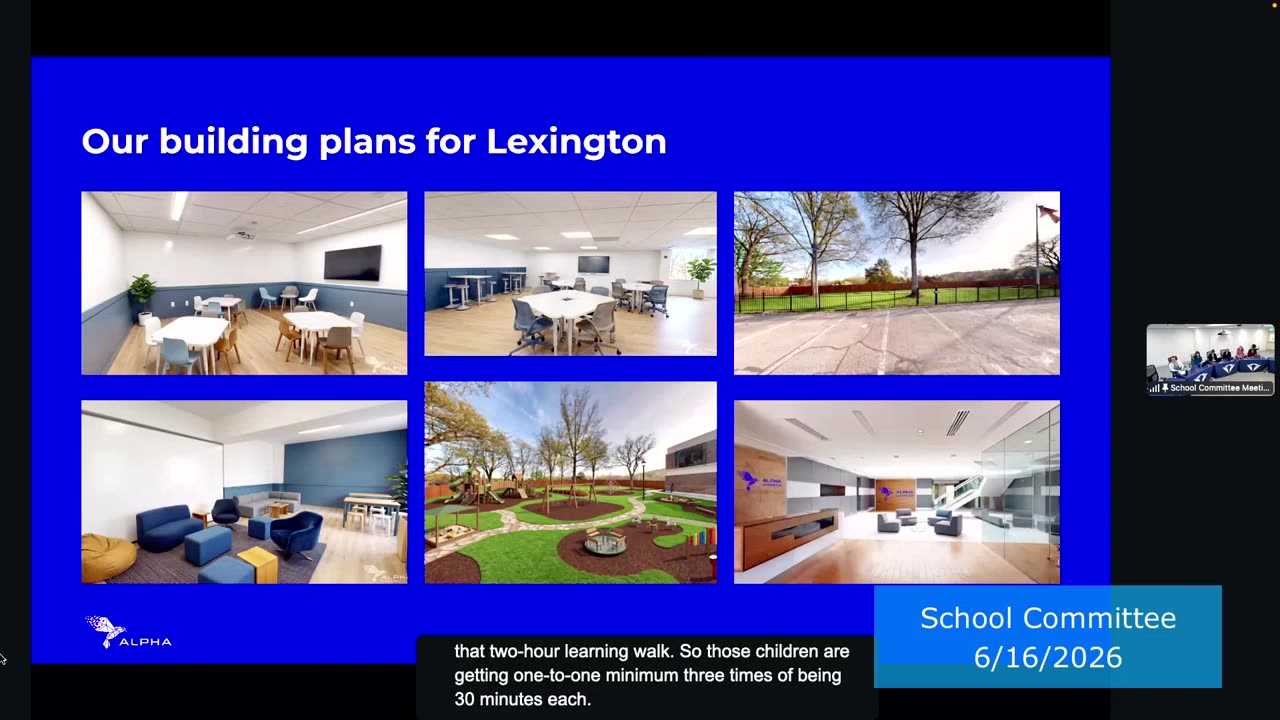 Video still
Questions about this meeting? Just ask.
Ask MeetingWatch answers from this meeting’s report, transcript, and records — with linked sources.
At the June 16, 2026, Lexington School Committee meeting, a major decision regarding the Alpha School private school application was postponed. Rather than reaching a decision on the proposed AI-integrated, mastery-based academic model, the Committee voted 4-0-1 to form a work group to conduct a more intensive review.
The proposal sparked significant debate among both committee members and the community. Key concerns raised included the school's reliance on proprietary software and 'boot camp' training for staff rather than traditional teaching licenses, the privacy implications of eye-tracking technology, and how the school's pedagogy approaches sensitive historical topics. One community member also expressed concern that such private models could undermine the public education system.
A roadmap for this review process is expected to be presented to the Committee by August 25th. As this work group begins its investigation, residents should stay engaged to ensure that the review addresses teacher certification standards, data privacy, and the long-term impact on Lexington’s public schools.
Public impact
Potential changes to daily school routines and device usage policies
The committee acknowledged implementation would be difficult and likely face community pushback, emphasizing the need for fairness.
The committee will monitor the state's conference committee progress and the DESE regulatory process.
Topics discussed
The Committee discussed proposed state legislation aimed at restricting cell phone use in schools to improve student mental health and socialization.
The committee engaged in a lengthy information-gathering session with state representatives; no local policy was enacted as the bill is still in the state conference committee stage.
The committee will monitor the conference committee's progress and participate in the upcoming public DESE regulatory process to provide input on how the law is implemented.
Committee members discussed the challenges of enforcing cell phone restrictions, including liability, stigma for students with medical needs, and community backlash.
The committee acknowledged that implementation would be difficult and likely face community backlash, but emphasized the need for fairness over punishment.
The School Committee conducted a formal review of Superintendent Dr. Hackett's performance across various professional standards.
The evaluation was presented as a composite review, with various ratings ranging from proficient to exemplary.
The final copy of the evaluation will be sent to the committee members.
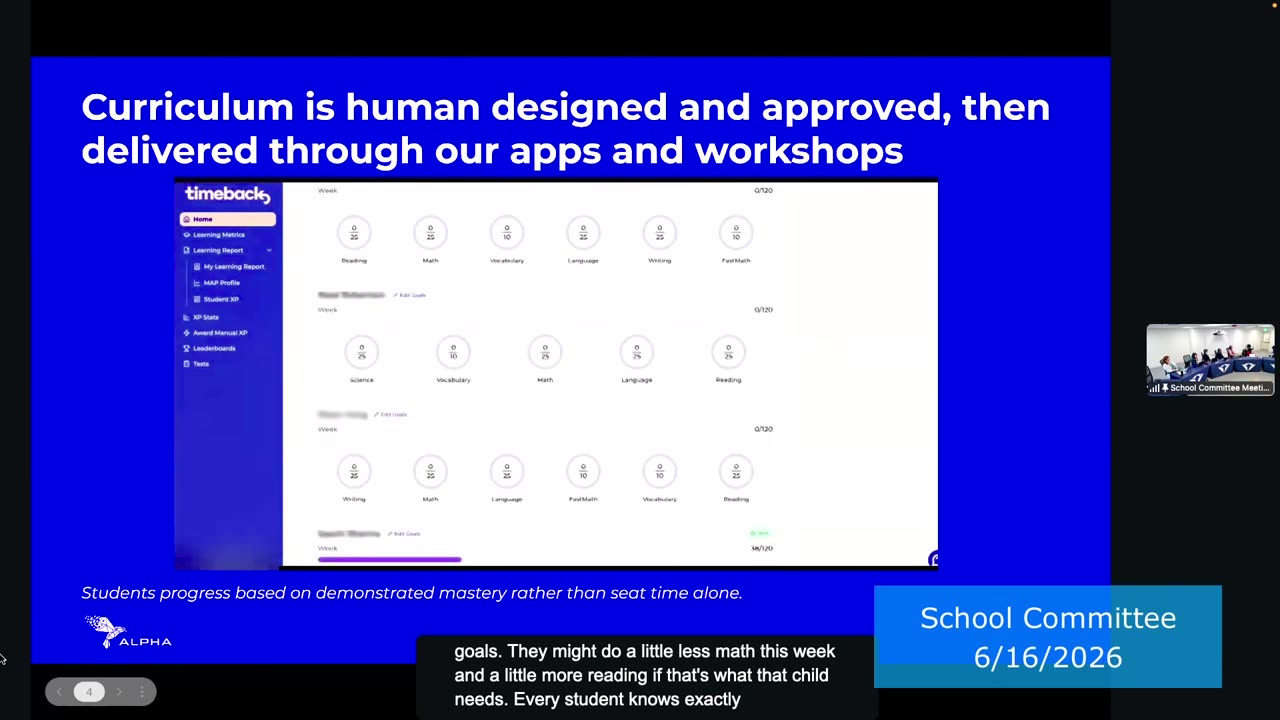 Video still
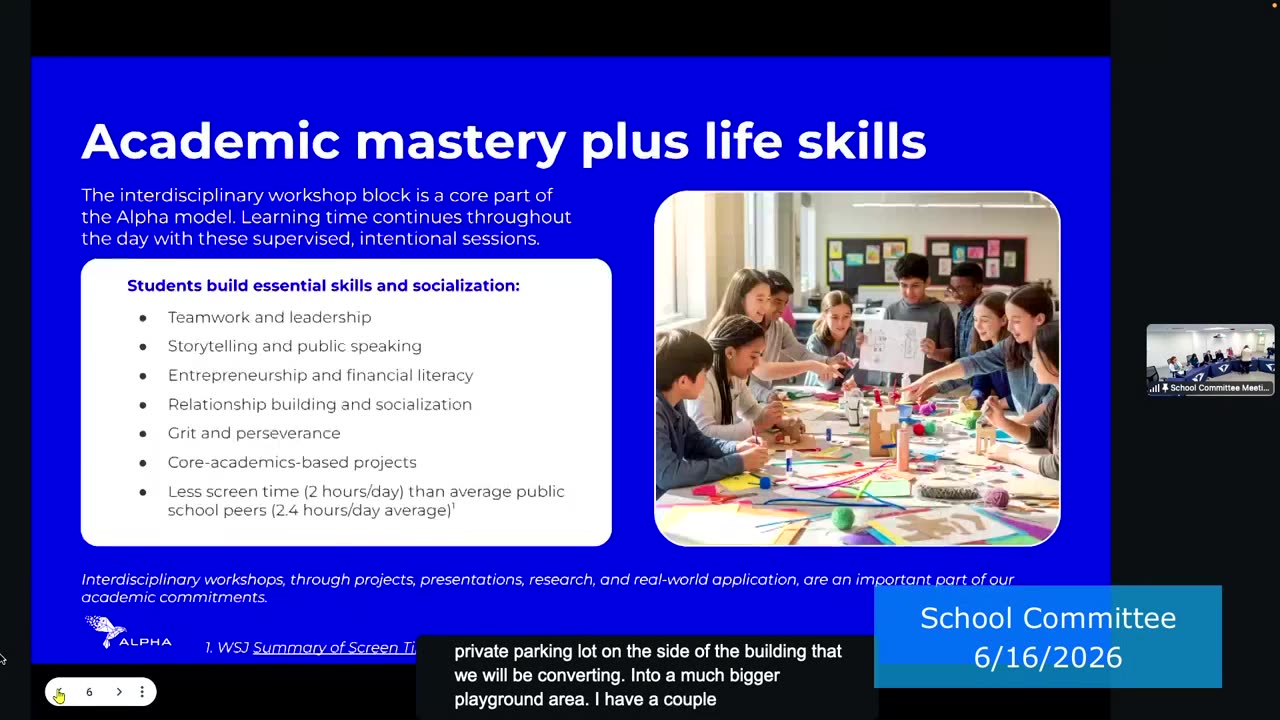
Representatives from Alpha School presented their academic model, facility plans, and operational structure for a proposed location in Lexington.
The presentation allowed committee members to ask clarifying questions regarding curriculum, safety, and staffing.
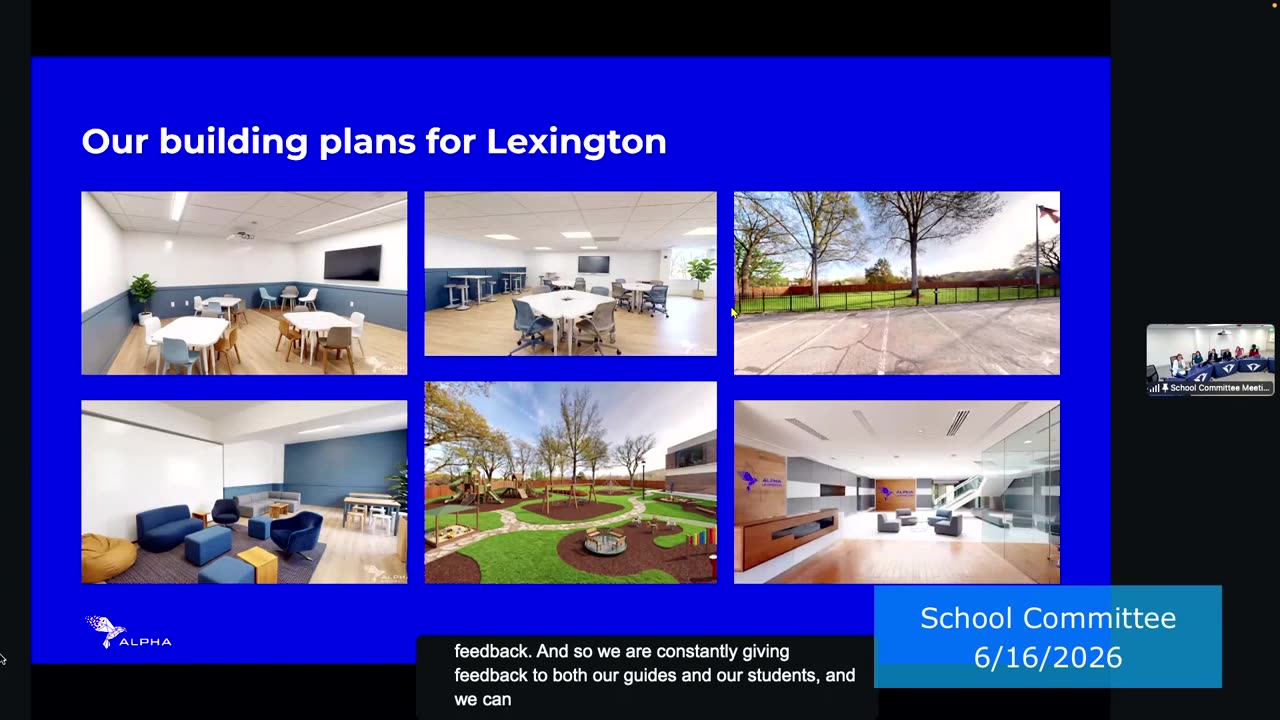 Video still
Alpha representatives explained their onboarding process, emphasizing that staff undergo extensive training and a 'boot camp' period rather than relying solely on traditional state teaching licenses.
The discussion clarified that Alpha relies on a mix of traditional educators and subject matter experts trained in their specific pedagogy.
Discussion regarding how Alpha integrates academic standards with project-based learning and addresses complex historical and humanities topics.
The presenters defended their interdisciplinary approach, though a debate occurred regarding the appropriateness of using 'both sides' terminology for historical atrocities.
Review of how student progress is measured using MAP testing and internal metrics, as well as the security of student data within their proprietary software.
Alpha explained that while MAP is multiple-choice, they use other methods for writing assessment, and they use eye-tracking internally to monitor engagement without storing identifiable faces.
Alpha representatives addressed their current accreditation status and their progress with state-level approvals.
The committee noted the differences in district-by-district DESE guidelines.
Community members provided testimonials in support of the Alpha School model, emphasizing its benefits for personalized learning and students with diverse needs.
The School Committee declined to take a vote on the proposal during the meeting, opting instead to form a work group to conduct a deeper review.
A work group will develop a roadmap/plan for review to be presented to the committee by August 25th.
Controversy & dissent
Potentially controversial issues
Alpha School Private School Application
State Bill 2581: Cell Phone Restrictions
Split votes
Public comment
Decisions logged
Action items
Member positions
Positions marked ~ are inferred from context and may not reflect the member's explicitly stated position. UNCLEAR means the vote was split but the record did not name how this member voted — it is not a “yes.”
From the meeting
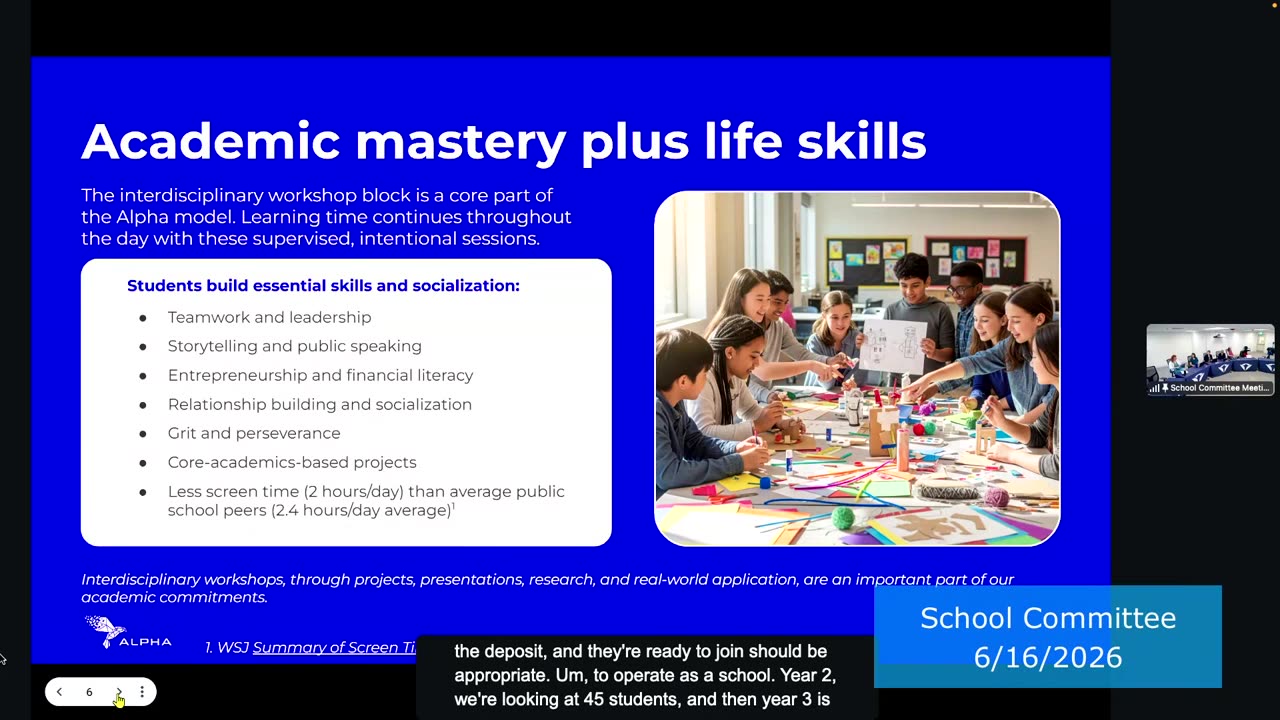 Video still
 Video still
Creating this report cost real money.
MeetingWatch attended, transcribed, and analyzed this meeting on its own dime. If this work is valuable to you, chip in to keep covering Lexington.
Follow Lexington
One email when a new report is published from the School Committee — or one weekly digest.
grok-4.3, gemma-4-26b, grok-4-fast, grok-4.20-0309-reasoning · analyzed 2026-06-30.
Members feature
Ask questions. Get answers with receipts.
Ask about anything covered on this page and get a plain-English answer that links to the report, the official records, and the exact moment in the meeting video.
Create a free accountFree with a MeetingWatch account — no card, no spam.
Already a member? Sign in
Ask questions about any meeting
Open a community, board, issue, or meeting and I can answer from its records — with links to the report, official documents, and the exact moment in the video.
Then reopen this button to start asking.
AI-generated from meeting records — verify against the linked sources. Conversations are stored (privacy).